Adjusting to New Medications
Starting new medications, especially modulators or long-term treatments, can bring life-changing adjustments. New medications often come with new routines, side effects, and emotional ups and downs. It can take time to find a rhythm that feels sustainable, especially when your health and lifestyle are changing too.
Building a New Routine that Works
When medications improve how you feel physically, you may find that your whole day-to-day rhythm shifts.
You might:
- Feel more energetic and want to do more
- Need to take medication at new times or with specific foods
- Have to restructure your morning or evening routines
Even small changes, like remembering to take tablets twice a day or planning meals to avoid side effects, can throw off your normal routine at first.
Tip: Think about where your medications naturally fit in. Can you take them right after brushing your teeth? With breakfast? Pairing new habits with existing ones (called “habit stacking”) can help you remember without stress.
One challenge we have seen is the change in routine for some patients who are having to take Trikafta with a fat containing meal. If someone wasn’t a morning person and they didn’t have breakfast every morning, they would have to change their routine to have a meal that’s suitable for Trikafta and this becomes a bit of a challenge for some people.
– CF Health Professional

Treatments & Routines
When modulators or other treatments are working and you feel well, it can be easy to wonder if you still need to keep up with treatments. Life gets busy, motivation can drop, and routines sometimes feel overwhelming, but staying consistent is key. Research shows that airway clearance is still considered an important part of CF care. In studies of modulators, people continued their usual airway clearance treatments, so the improvements seen were from using modulators alongside regular treatments, not from stopping them. Consistency not only helps maintain your health long-term, but it also makes it easier to spot when something isn’t quite right.
Sometimes it’s hard to take my medication because I just feel very healthy. Even if you feel great, you just need to take the medication to stay on top and stay healthy. If I don’t stay on top of my treatments and physio, my chest starts getting all foggy and stuff again and I don’t feel as good as normal.
– Teenager with CF

Common challenges:
- Feeling well and questioning if you really need to do every treatment.
- Juggling treatments alongside school, uni, work, and family or social commitments.
- Feeling bored or frustrated with daily routines.
- Wondering if “just skipping one” really matters.
- Managing side effects of new medications.
Adjusting Routines
Some people may find that their usual routines, including airway clearance, nebulisers, exercise, enzymes, salt tablets and other medications may no longer have the same impact as they used to. Coming up with new routines may take time as you don’t want to adjust everything at once. Maintenance routines will look different for everyone. Work with your CF team to come up with a plan that suits your lifestyle and baseline symptoms. There is real value in talking openly with your health care team about treatment, working in partnership to develop care plans, and preparing for clinic visits with questions or topics you want to discuss. Being honest and open with your team helps them understand what is really going on and support you in the best way possible.
It is such a complex disease that one person’s experience living with CF could be completely different to someone else’s. I sometimes think that’s hard for people without CF to comprehend.
– Adult with CF

Why Consistency Matters
- Continuing your maintenance treatments helps protect your lungs, energy, and long-term health, even when you feel fine.
- Regular routines make it easier to notice changes. For example, if airway clearance suddenly feels harder or you become more fatigued with the same intensity of exercise, it could be an early sign of infection.
- Consistency supports confidence and independence – small habits add up over time.
If you fall off your treatment routine, be kind to yourself. Take a moment to reflect on what worked and what didn’t, so you can gently get back on track without beating yourself up.
Tip: Think of treatments like brushing your teeth: you don’t only do it when they feel dirty; you do it to prevent problems and stay healthy.
I think it’s extra important to keep doing treatment when you’re taking Trikafta, because it’s not a cure. You still have CF and still need to make sure you’re clearing your airways and even though it is a lot better, you can get sick again if you don’t keep up.
– Parent of a child with CF

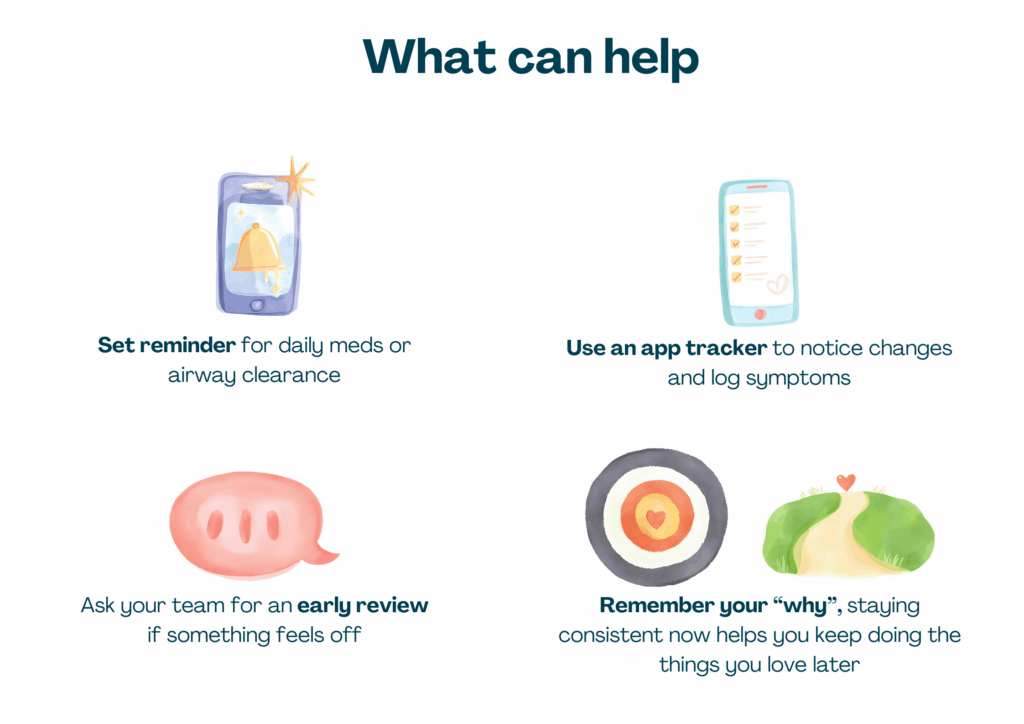
Useful tracking apps:
- Perx Health: digital care management app that offers financial rewards for completing treatments
- Manage My Care: WA department app that helps digitally track their WA health public outpatient appointments and referrals
- Bearable: tracks symptoms, mood and habits to identify trends and correlations
- Medisafe: is a medication reminder app, providing timely reminders and monitoring adherence
- MyTherapy: does medication reminders, symptom tracking, and can be a health diary
- CareZone: health management app that helps users track medications, appointments and symptoms
Tip: Use a simple tracker to log what you take, when you take it, and how you feel after. Bring this to your next CF team appointment. It can identify helpful adjustments or alternatives.
Managing Unexpected Side Effects
Some people experience new or lingering symptoms. These side effects can catch you off guard, especially when you’re trying to feel better. It’s okay to feel frustrated or discouraged. They may be temporary, but they’re valid and worth tracking. You might find patterns over time, for example, brain fog that’s worse after taking meds in the morning or sleep that improves when you shift the timing.
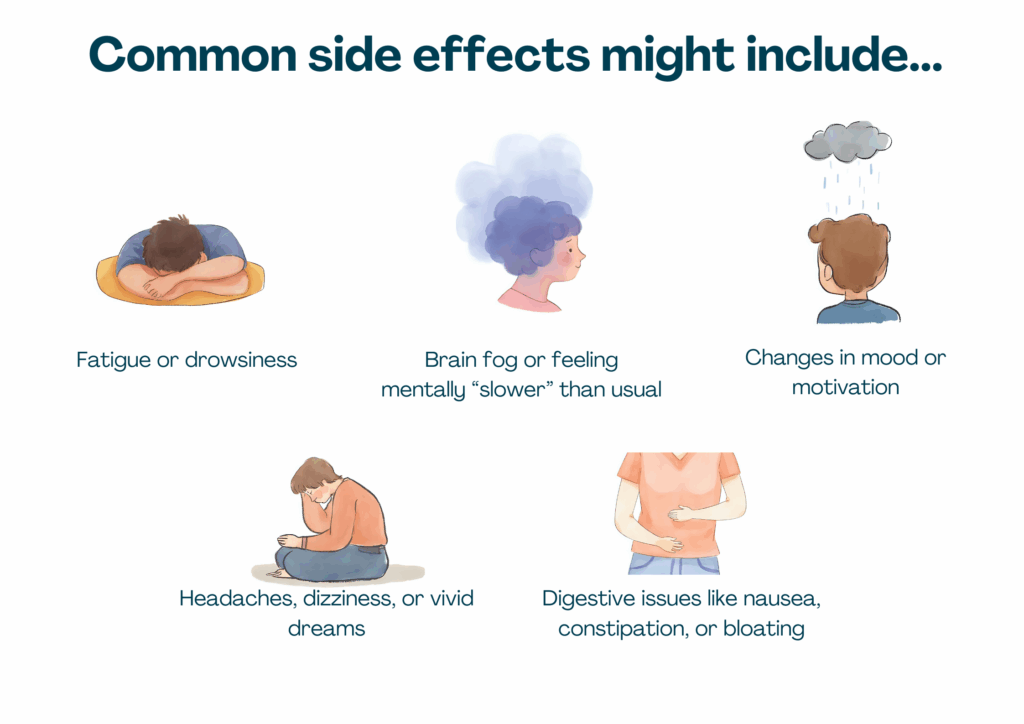
Tip: Keep a note of symptoms or side effects, especially if they affect your day-to-day life, and talk to your care team. Small changes, like adjusting the timing of treatments, can make a big difference. If you are looking to reduce or adjust your treatments, it’s important to work with your CF team to develop a new routine that helps you monitor your health and keeps you well.