Everyday Spending Management
These tools and tips are here to support you in building confidence with everyday money management, making informed spending choices, and creating a financial routine that considers your CF needs, suits your lifestyle, values, and goals.
In terms of financial planning, it is important to look at what you truly value and what brings joy. Is that travel? Is that having a coffee with your friend? If it is, those are things that you want to try and prioritise.
– CF Health Professional

Budgeting
Creating a budget helps you plan for everyday costs and unexpected expenses like hospital visits or medications. Even a simple monthly plan can make a big difference.
Living with CF can bring added financial pressure. A recent study found that families affected by CF lost an average of around AUD $1,080 per month due to extra expenses and reduced income. While based on UK data, similar costs are likely for Australian families given rising living and healthcare expenses.
That’s why having a clear, flexible budget is so important, it helps reduce stress, stay on top of bills, and build savings for what matters most.
The way I manage the cost for my treatment comes down to one word, and that’s a budget. I made sure that I calculated what my monthly medication costs were, and I had that money set aside because that was more important than me having new clothes, new shoes, new toys, that that was a priority for me.
– Adult with CF

How to get started
Start tracking your income and expenses. Recording your spending over a few months gives a better idea of your real costs, since some months are more expensive than others. Be sure to include cash, card and online transfers. Include a month where you have had to take time off work for a clinic appointment or admission if this is usual for you.
Record your income
- List all income sources, including regular and casual work and any other payments you receive like subsidies.
- Include the amount, where it comes from, and how often you receive it.
- Don’t forget government payments, investment income, or support payments.
Record your expenses
- Non-negotiable expenses: rent or mortgage, groceries, insurance, car expenses, medications and other medical costs, utility bills, and other bills.
- Fixed or regular costs: gym memberships, streaming services, school or sports fees and other membership or subscription costs.
- Irregular or flexible spending: coffees, takeaway meals, social activities, entertainment, online shopping, etc.
How Interest Actually Affects Your Money
Needs vs wants
One of the most empowering steps in managing your money is learning to recognise the difference between needs and wants. This isn’t about denying yourself joy or comfort, it’s about making choices that align with your values, goals, and wellbeing.
For people living with CF, the list of essential expenses may be longer. These might include medications, medical equipment, groceries tailored to specific nutritional needs, and potentially higher health or insurance costs. Recognising these as non-negotiable helps ensure your budget reflects your unique health needs and supports your overall quality of life.
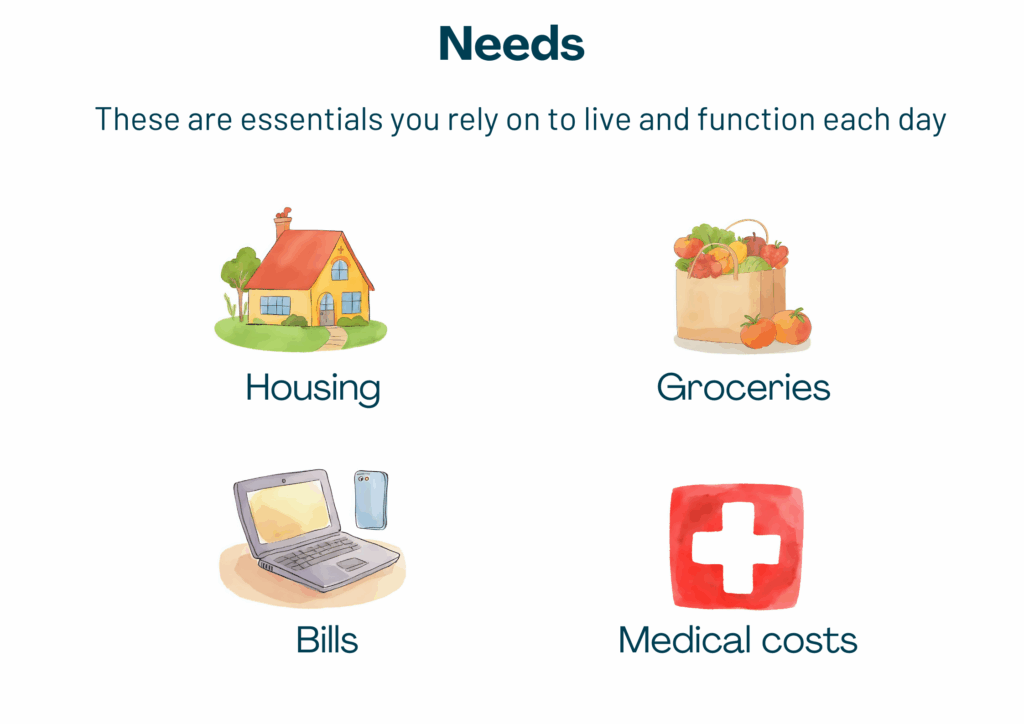
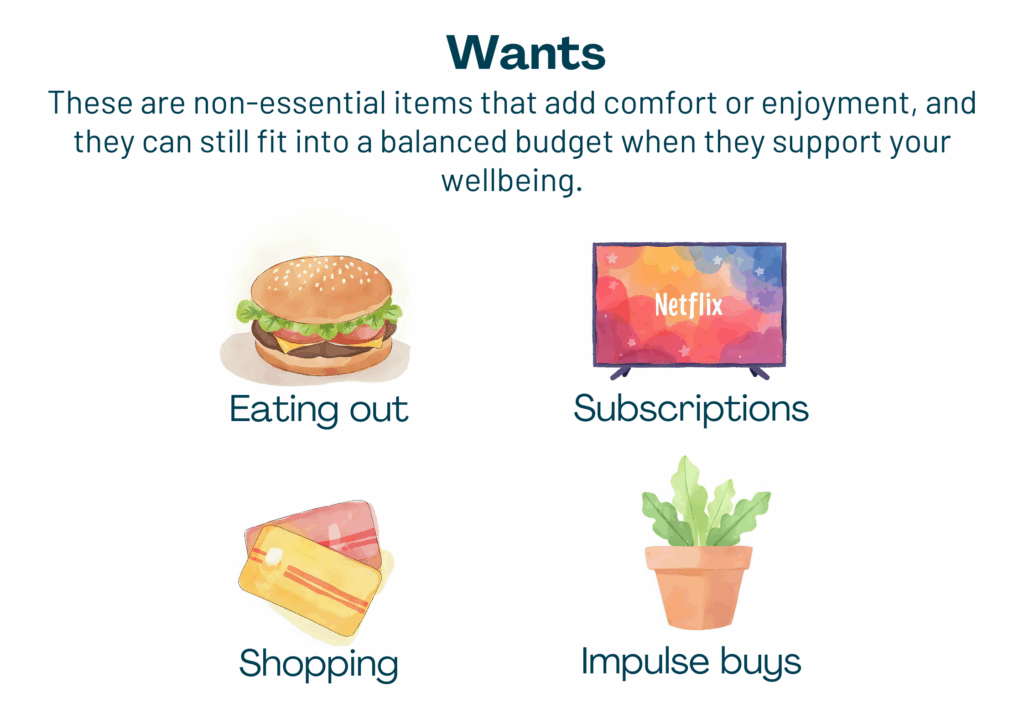
Everyone’s definition of “want” and “need” will look a little different depending on their life circumstances, and that’s okay. The key is to build awareness around your spending, and to decide what’s most important for your health, happiness, and future.
When we look at finances, can I let go of some of these financial commitments that aren’t really doing anything for me, that aren’t filling up my cup?
– CF Health Professional

Creating a budget
Budgeting will look different for everyone. You may like to use a spreadsheet, a personal diary, or an online digital tool.
- Start by separating needs from wants
- Include a CF buffer for unexpected non-negotiable costs, like hospital admissions, new medications, or equipment. This may also include temporary income loss for appointments or admission if you are unable to use sick leave.
- After accounting for your essential expenses, see what’s left for saving or spending on non-essentials
- Set weekly or monthly saving goals and consider using separate accounts for different expense categories to reduce the risk of overspending
- Some banks also offer “round-up” features, where purchases are rounded up to the nearest dollar and the spare change is automatically moved into your savings
If your expenses are higher than your income, try:
- Reprioritising your spending to cover the essentials first
- Looking for cheaper alternatives to current purchases
- Identifying “wants” that could be paused or reduced
- Exploring support services that offer discounted groceries, medication, or financial aid (e.g., Foodbank). Speak with a social worker for support if needed.
- Making your expenses multitask (e.g., cycling or walking to work or uni can save on both transport and gym costs)
- Forward planning where possible, such as bulk purchasing or paying fees annually to reduce overall costs
Review regularly
Review your budget every few months and adjust as things change. Keep it simple, focus on the big categories, not every coffee. Regular check-ins help you stay on track, avoid overspending, and adapt to changes in health or priorities. Think of it as a health check for your money. If you need more time off work for treatments, a quick review can help you rebalance before things pile up.
Spending Leaks
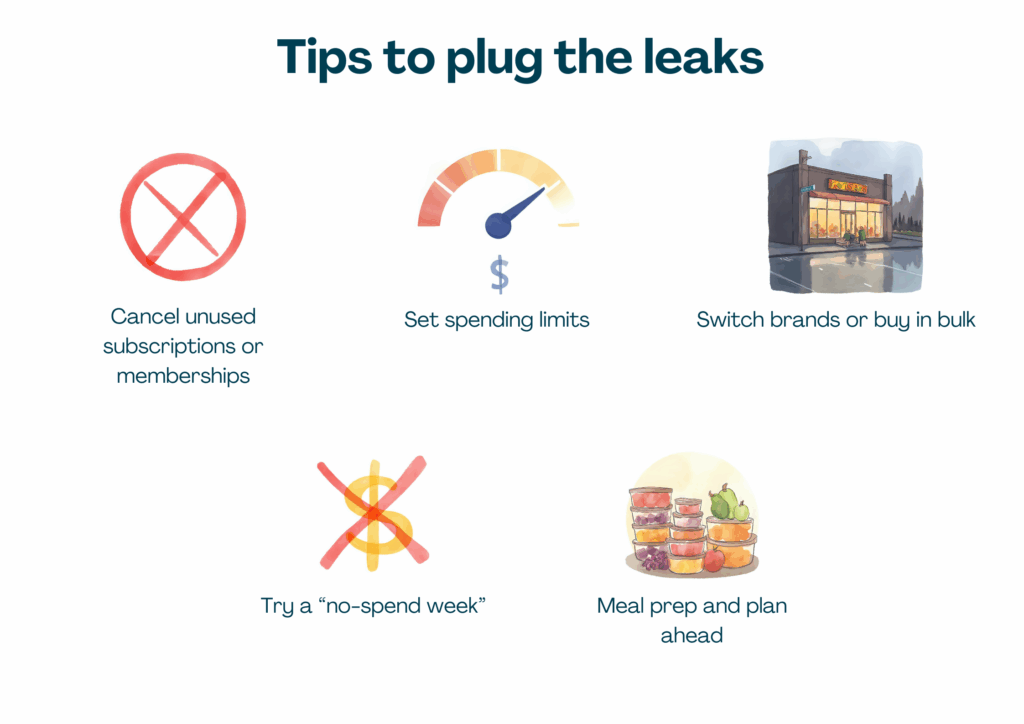
Spending leaks are usually small, regular costs that seem harmless on their own but can drain your finances when added together over weeks or months without you noticing. It is important to identify common spending leaks and try to reduce or eliminate them.
Examples of spending leaks include:
- Unused subscriptions or memberships
- Regular takeaways including snacks, lunches, or coffees
- Food or grocery delivery instead of planning ahead
- Paying extra for brands or express shipping
- Forgetting to cancel free trials that turn into paid ones
- Impulse buys and frequent small online orders
How to identify them
Start by reviewing your bank statements or app purchase history for the past month or two. Look for patterns or repeated small expenses. Ask yourself:
- Do I use this subscription or service regularly?
- Am I getting value from this, or is it just a habit?
- Are there cheaper alternatives I’d be happy with?
Even small changes can free up money to put toward savings or more important expenses. Building awareness is the first step.
Bills and Expenses
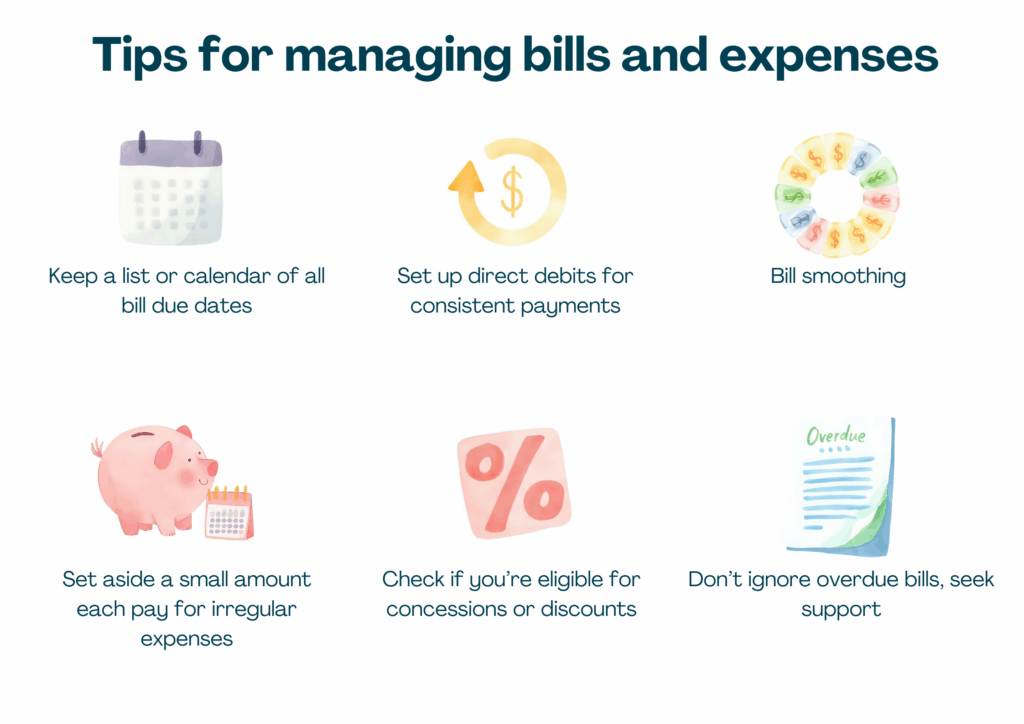
Managing your regular bills and unexpected expenses can reduce stress, help you stay in control, and avoid falling behind financially. Saving for unexpected expenses is essential to ensure you can stay on top of your health-related costs.
We worry our child will be sick when she’s older and not be able to cover bills or mortgage. We always worry about her future health and the financial impacts that may have on her life if anything happened to us.
– Parent of a child with CF

Missing bill payments can lead to late fees, service disconnection, and damage to your credit score. But with some simple systems in place, you can stay organised and reduce the burden.
Medication and CF-related expenses
Some costs, like prescriptions, appointments, and travel for medical appointments can add up quickly. Time off work may also make it harder to manage the financial load of CF. Before being listed on the PBS, Trikafta cost Australians with CF over A$250,000 per year, showing how high treatment costs can be without support. Try to keep a small buffer in your budget for unexpected expenses and ask your CF care team about ways to reduce out-of-pocket costs.
With people living longer, with high burden of care and co-morbidities which are all expensive, financial planning is more important..
– Parent of a child with CF

Simple ways to get started
- Use trusted websites like MoneySmart (run by ASIC) for guides, calculators, and budget planners.
- Try free apps like Frollo, Money Brilliant and PocketSmith or your bank’s app to track spending and set goals.
- Track your spending manually for one month using a notebook, spreadsheet, or app – this helps you spot trends and leaks.
- Automate savings – even $5 a week can add up over time if transferred into a separate savings account.
- Bookmark helpful resources on your phone for quick reference when needed.
Financial Support
If your expenses are difficult to manage or you’ve fallen behind on payments, support is available:
- CFWA subsidies for eligible expenses (e.g., nutritional supplements, equipment, parking or travel support)
- Government subsidies such as the Carer Allowance or Health Care Card concessions
- Crisis payments for urgent or unexpected expenses
- CFWA referral to financial counselling or assistance services
- CFWA referral to social worker for advice
Financial Coaching
Managing finances can sometimes feel overwhelming, particularly when living with a chronic health condition or caring for a family member with CF. CFWA can connect you with trusted resources, practical tools and support services to help improve your financial wellbeing.
Whether you need assistance with budgeting, understanding available rebates and subsidies, or accessing professional financial counselling, our team can help point you in the right direction. This support is available to people with CF and parents/carers. Reach out to us on services@cfwa.org.au to access.