CFTR Modulators
Traditionally, adults with CF were encouraged to eat a high-energy, high-fat and high-salt diet to help compensate for poor absorption and the extra energy used by the body to stay well.
With the introduction of CFTR modulators, this advice has changed for many people. Better lung health and improved absorption can mean the body needs less additional energy, while weight gain, high cholesterol, high blood pressure and other long-term health concerns are becoming increasingly important.
New recommendations are moving towards an individual approach that encourages a balanced nutrient-dense diet to support long-term health.
Taking Modulators Correctly
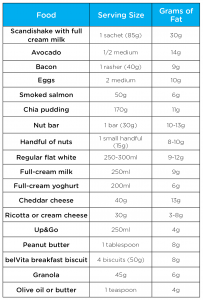
In order for CFTR modulators to be absorbed in the body, they need to be taken with a substantial fat containing food. It can be hard for some people to take modulator medicine correctly in the morning if they usually only have a light breakfast or skip breakfast. The table below outlines the fat content of some typical breakfast foods.
Your evening dose can be taken with your usual dinner meal. Talk to your CF pharmacist or medical team about your exact requirements. Read more about taking modulators correctly and food ideas here.
Changes to Medications
Improved health, absorption and nutritional status may mean that some medications may need regular reviewing. These areas may include:
- Salt
- Vitamins
- Blood glucose
- Pancreatic function
- Nutrition supplements
You should never change your medication dosages without consulting your CF team.
Weight Gain
Some people (not everyone) may gain weight when they commence a CFTR modulator without making any changes to their diet or exercise regime. For some, this will be desirable, particularly if you were previously underweight or struggled to maintain your weight. You may need to continue following a high energy diet, however the focus should remain on aiming for a balanced, nutrient-rich diet.
For others, weight gain may be unwanted, particularly if you were previously a healthy weight or overweight. Dietary changes may be recommended if you are gaining weight rapidly or your weight shifts above the healthy weight range. In this case it is important to talk to your CF dietitian and doctors for tailored recommendations. Regardless of your weight, it is still important to eat regular meals and eat a variety of foods.
If you become unwell and are unable to eat as much or as regularly as usual, you should halt attempts to lose weight and re-introduce higher energy and fat foods until you recover. It is important that you are not losing weight when you are unwell as this weight usually comes from muscle mass rather than fat mass.
More Information
Click on the links below for more information and recipe ideas.
For more information, discuss with your CF dietitian